
Monoblock stoppers
整体塞棒
Regulating steel flow from the tundish.
- Application
- Inside the tundish · Nozzle inlet
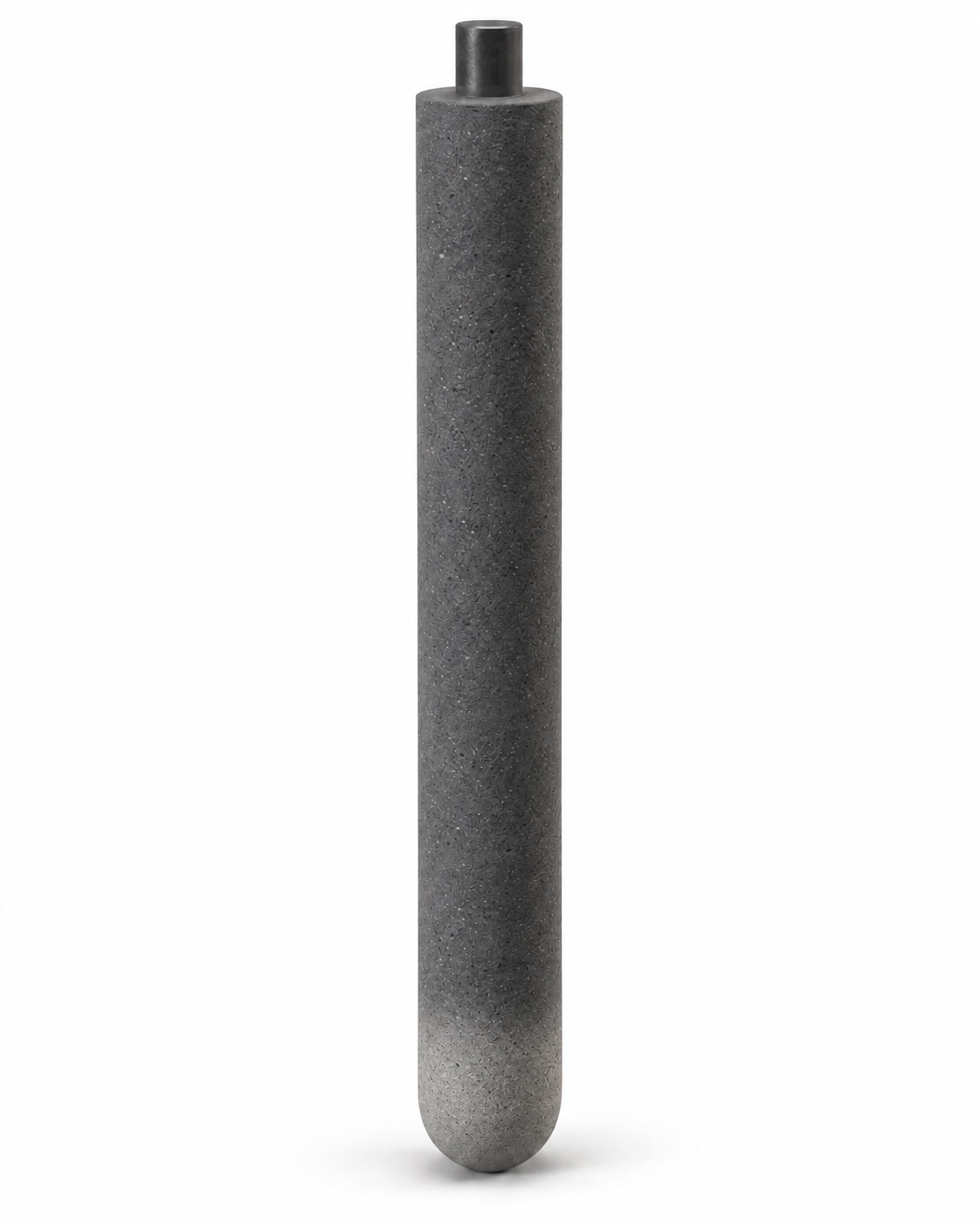
Product overview
A monoblock stopper works with the tundish nozzle to start, stop and regulate steel flow. Raising or lowering the rod changes the opening at the nozzle seat. Selection considers the nose profile, mating seat, steel grade and casting conditions together.
- Product range
- Monoblock stoppers and stoppers for large slab casting.
- Application context
- For tundish flow control, used with a matching nozzle and stopper mechanism.
Application and installation
The rod sits inside the tundish with its nose aligned over the outlet seat. A lifting mechanism changes the gap between nose and seat to regulate delivery towards the mould.
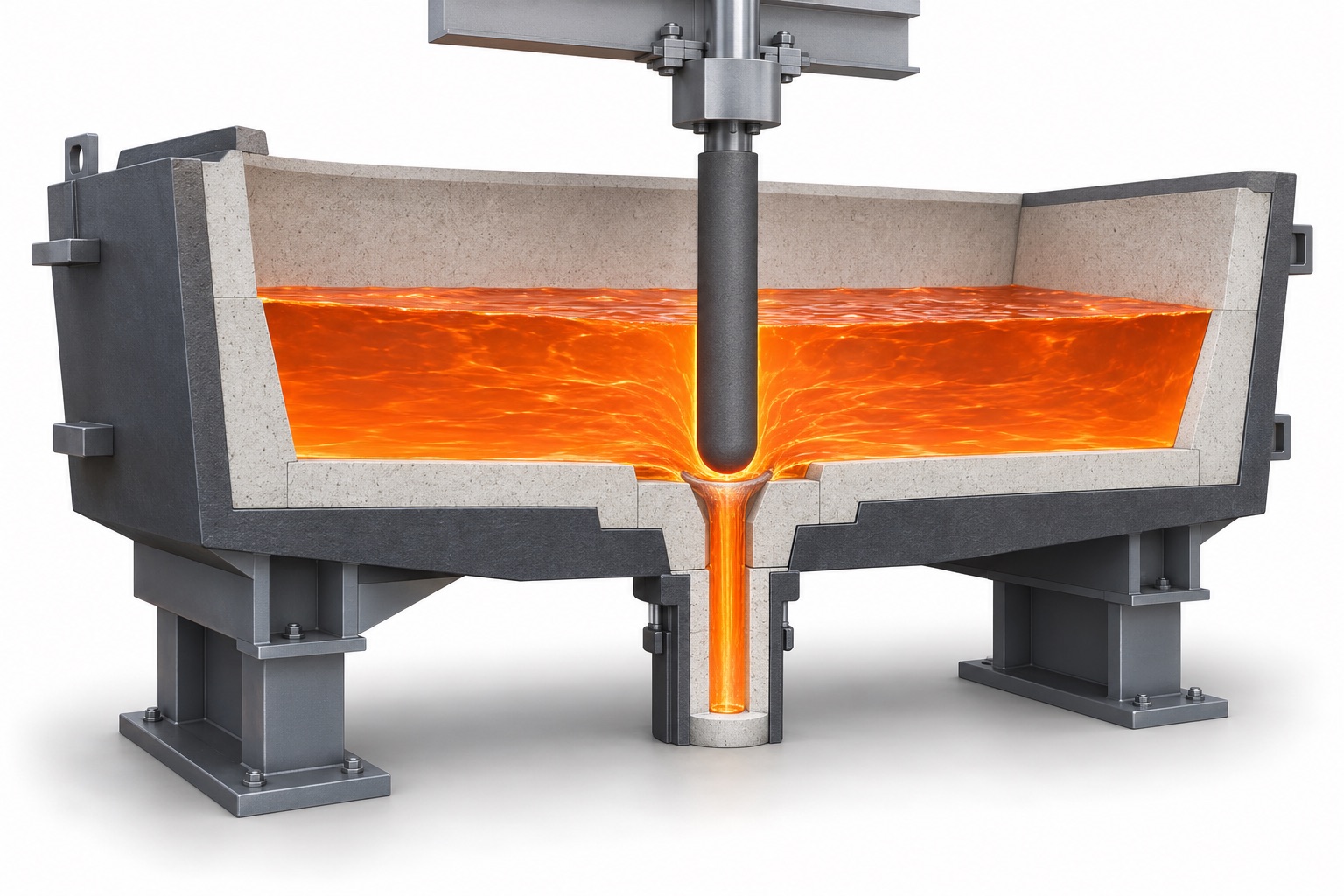
Structure and steel flow
Rod position changes the opening. Actual flow also depends on tundish head, nozzle dimensions, mechanism behaviour and operating conditions. The diagram explains opening and closure geometry only.
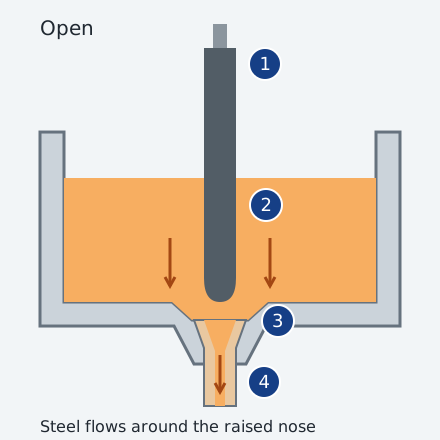
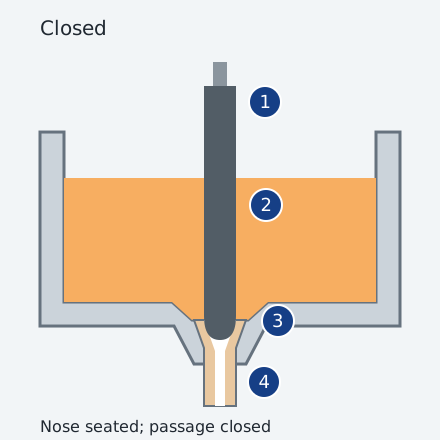
- 1
Upper connection
Connects to the lifting mechanism. Confirm connection, installation length and travel to maintain alignment with the nozzle seat.
- 2
Rod body
Transfers mechanism movement to the nose. The nose joins the body smoothly; its profile is matched to the nozzle seat.
- 3
Nose and seat
The profiles form a matched pair. Raising the rod opens a flow gap; lowering it onto the seat closes the passage. Confirm the fit from drawings.
- 4
Outlet passage
Steel moves around the outside of the nose, through the gap and into the nozzle. Orange indicates steel, not an internal passage in the rod.
Product range and matching considerations
| Monoblock stoppers | For opening, closing and regulating tundish outlets with a suitable stopper mechanism. |
|---|---|
| Stoppers for large slab casting | Review the mechanism, mating nozzle and operating conditions for the slab caster. |
Check the mating pair
Provide both nose and seat drawings, rather than overall rod length alone.
Check installation
Confirm the connection, alignment, effective stroke and available space.
Review service conditions
Share steel grade, temperature, sequence requirements and the current condition of the nose and seat.
Functions and selection considerations
Flow regulation
The opening between the stopper nose and nozzle seat controls the steel flow.
Mating geometry
Confirm the nose profile, operating position and nozzle seat dimensions as a matched assembly.
Operating conditions
Discuss materials and geometry against steel grade, casting temperature and sequence requirements.
Information for product selection
Drawings and operating details help confirm product fit and service requirements.
| Steel and temperature | Steel grade, casting temperature and operating conditions |
|---|---|
| Mating drawings | Overall length, nose profile and nozzle seat drawing |
| Mounting interface | Connection, mechanism dimensions and working stroke |
| Service requirements | Target sequence, current product and improvement needs |
Materials, dimensions and service requirements are subject to the agreed technical documents.
Discuss drawings and requirementsRelated products
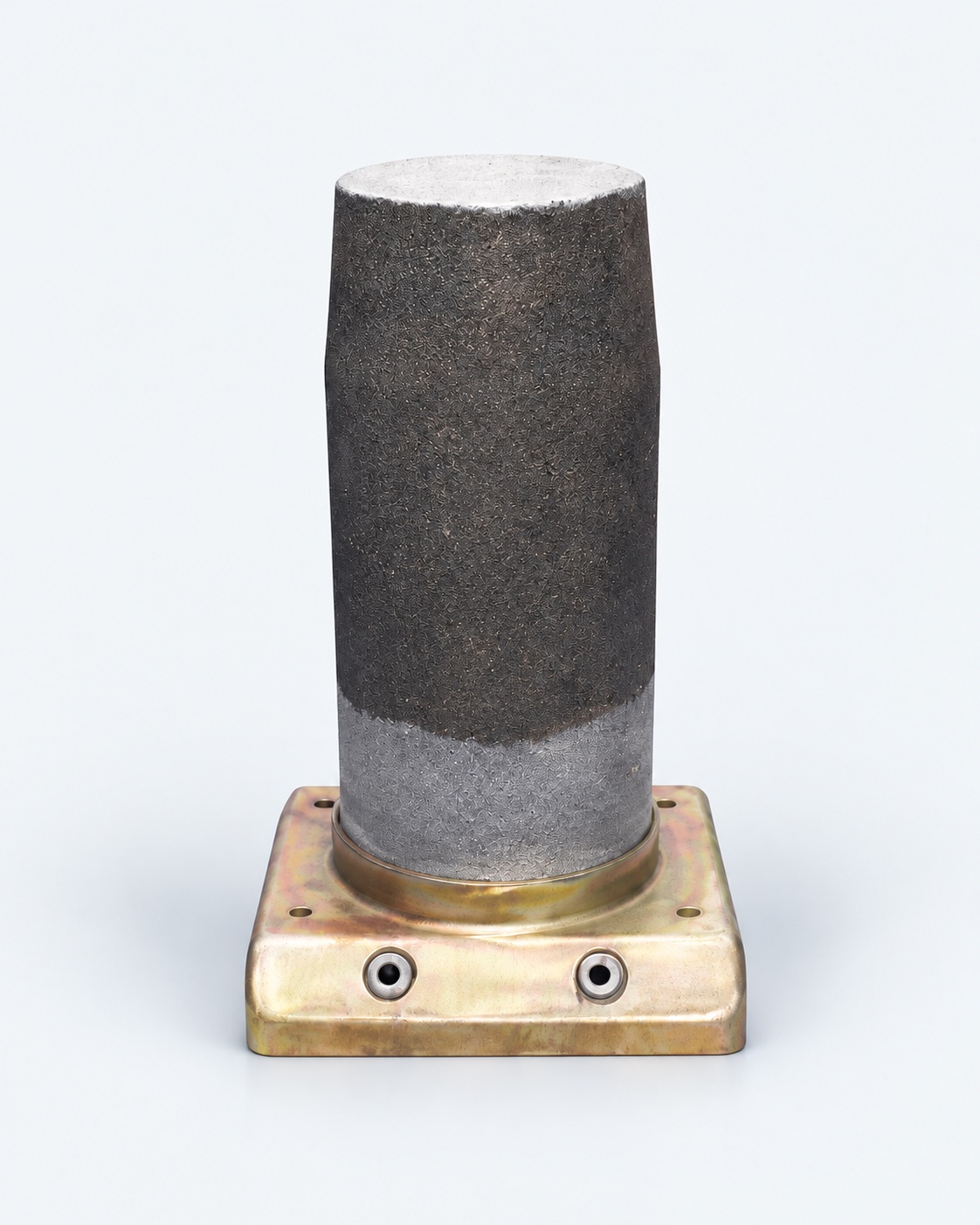
Tundish nozzle
中包水口 · Tundish upper nozzle
A tundish upper nozzle matched to the bottom lining, stopper and lower nozzle.
View product details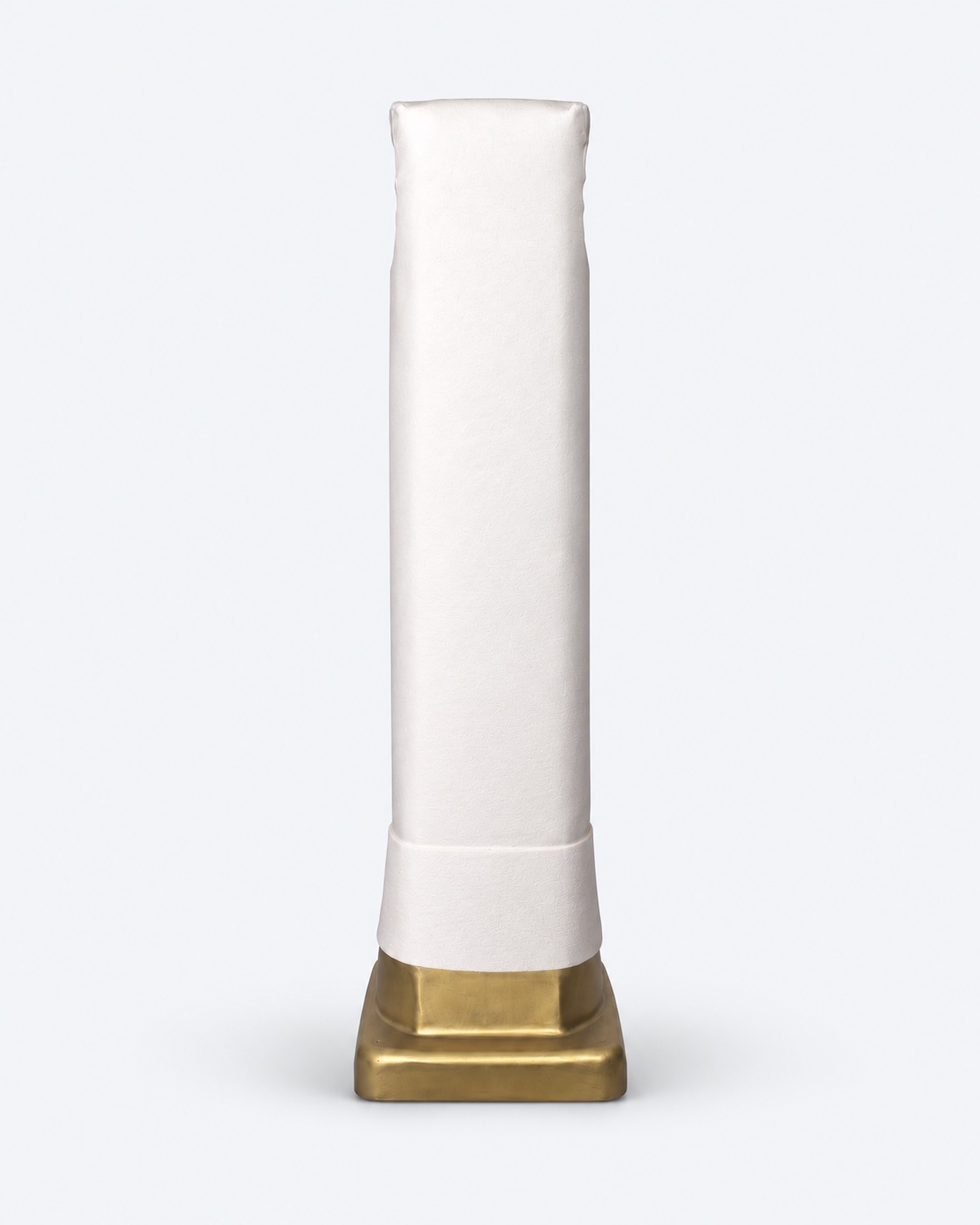
Slab casting nozzle
板坯水口
Submerged delivery for slab casting, with tube and outlets matched to the application.
View product details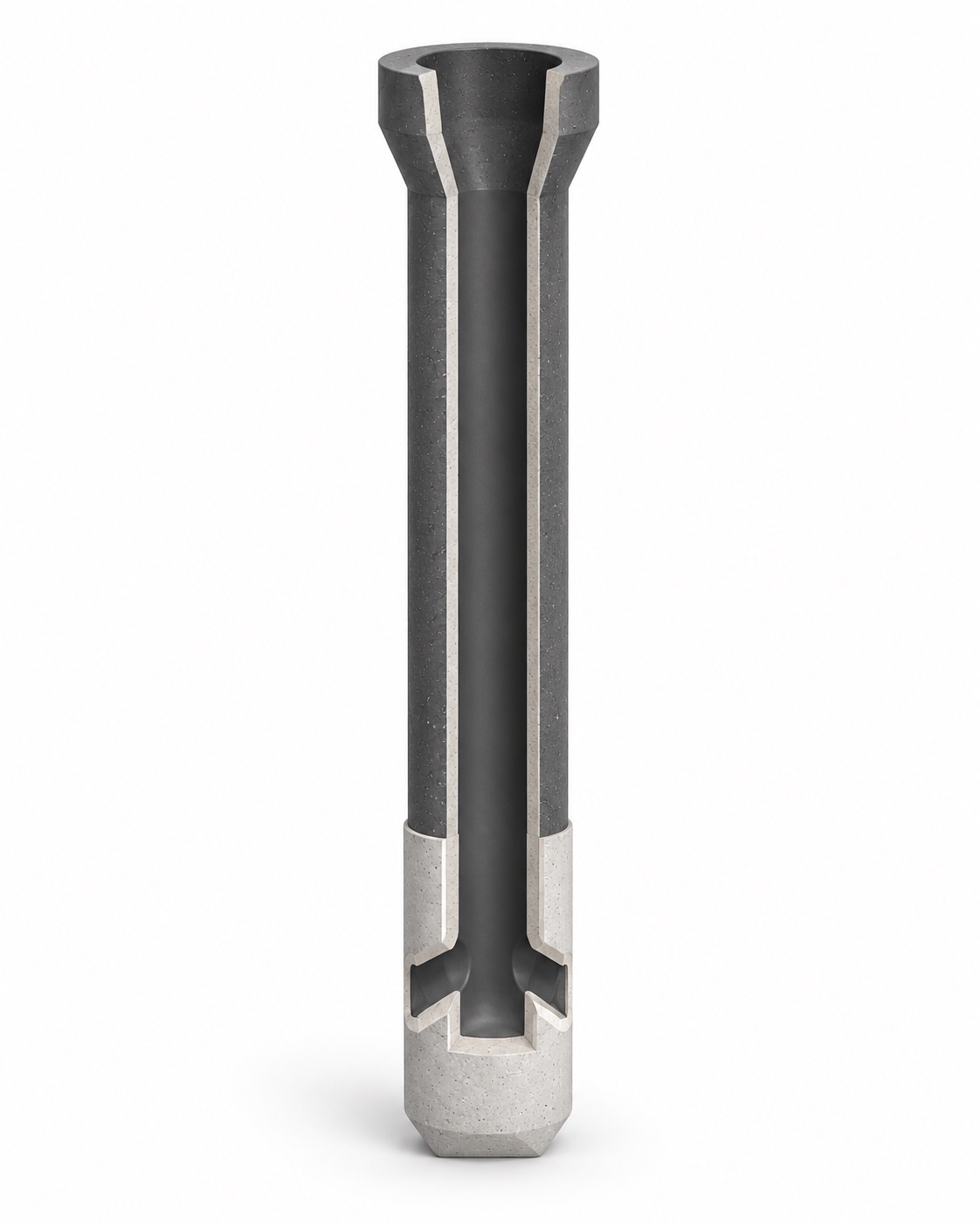
Integral submerged entry nozzle
整体水口
One continuous refractory from the tundish seat to the mould.
View product detailsLet’s discuss
your application.
Contact Hongda about product selection, drawings, operating conditions and cooperation.
- Telephone
- +86 533 5688763
- Address
- Dongliu Village, Luocun Town, Zichuan District, Zibo, Shandong, China
Product enquiry
Create enquiry emailReview and send in your email app. Attach drawings there.
You can also paste the details into your webmail.