
Ladle shroud
保护套管 / 长水口
Protecting steel transfer from ladle to tundish.
- Application
- Ladle → Tundish
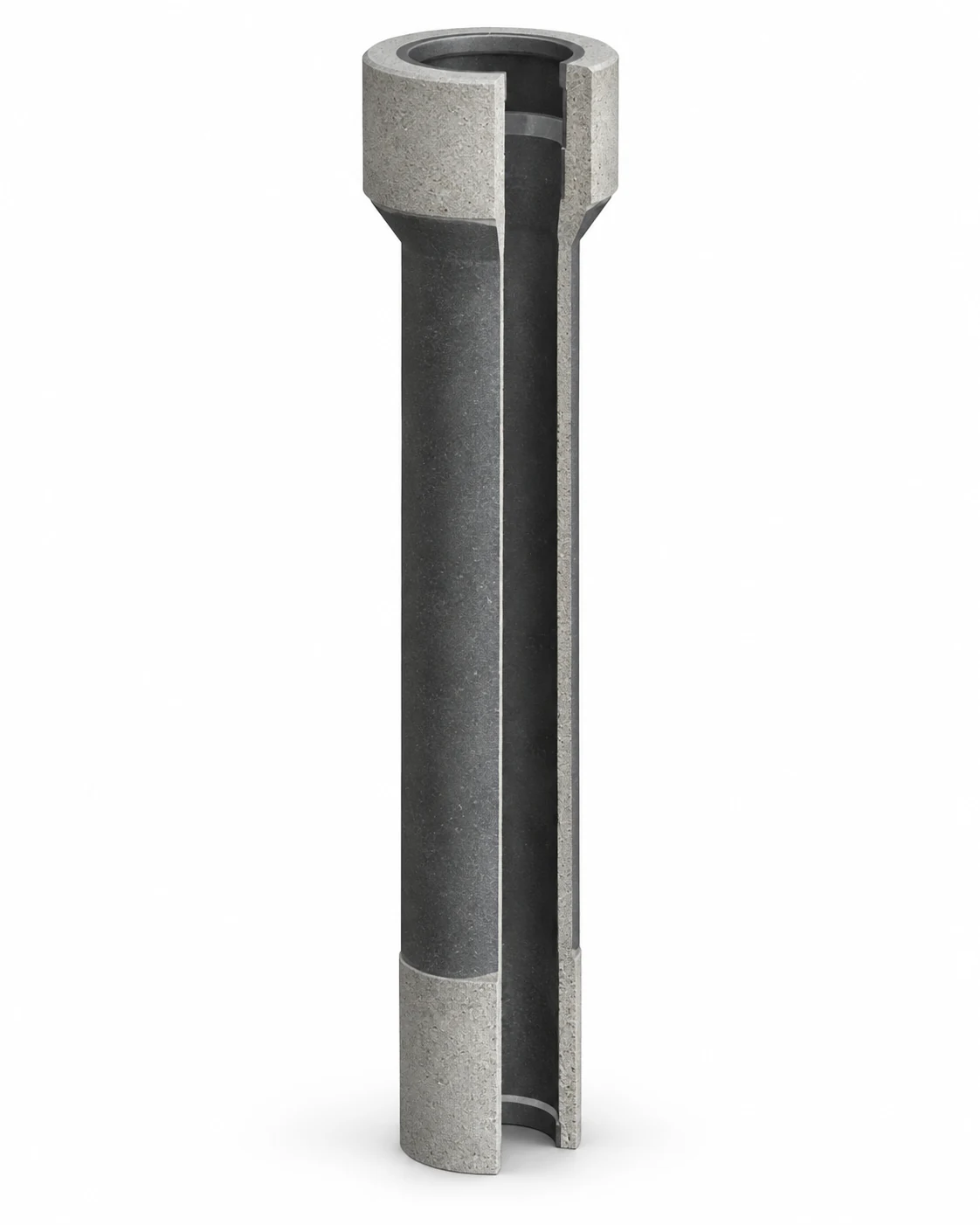
Product overview
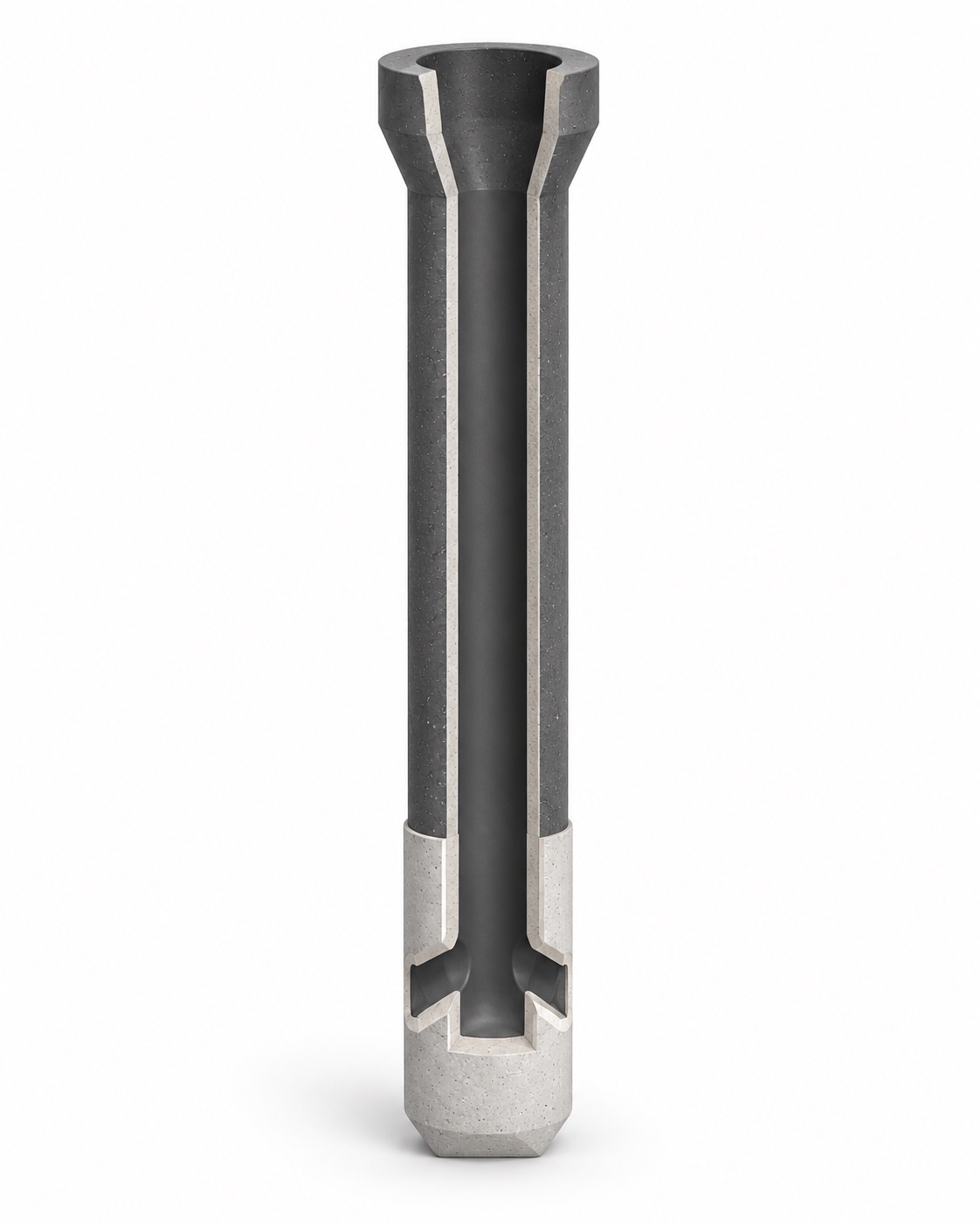
A ladle shroud connects the ladle outlet with the tundish to provide a protected transfer path and reduce exposure of the steel stream to air. Connection fit, sealing, tube dimensions and outlet position should be reviewed against the casting arrangement.
- Product range
- Preheat-free ladle shrouds and ladle shrouds for large slab casting.
- Application context
- For protected ladle-to-tundish casting. Follow the grade-specific instructions for preheat-free products.
Application and installation
The upper seating cup mates with the ladle collector nozzle. The lower end extends into the tundish bath. Review the seat, handling position and working immersion as one arrangement.
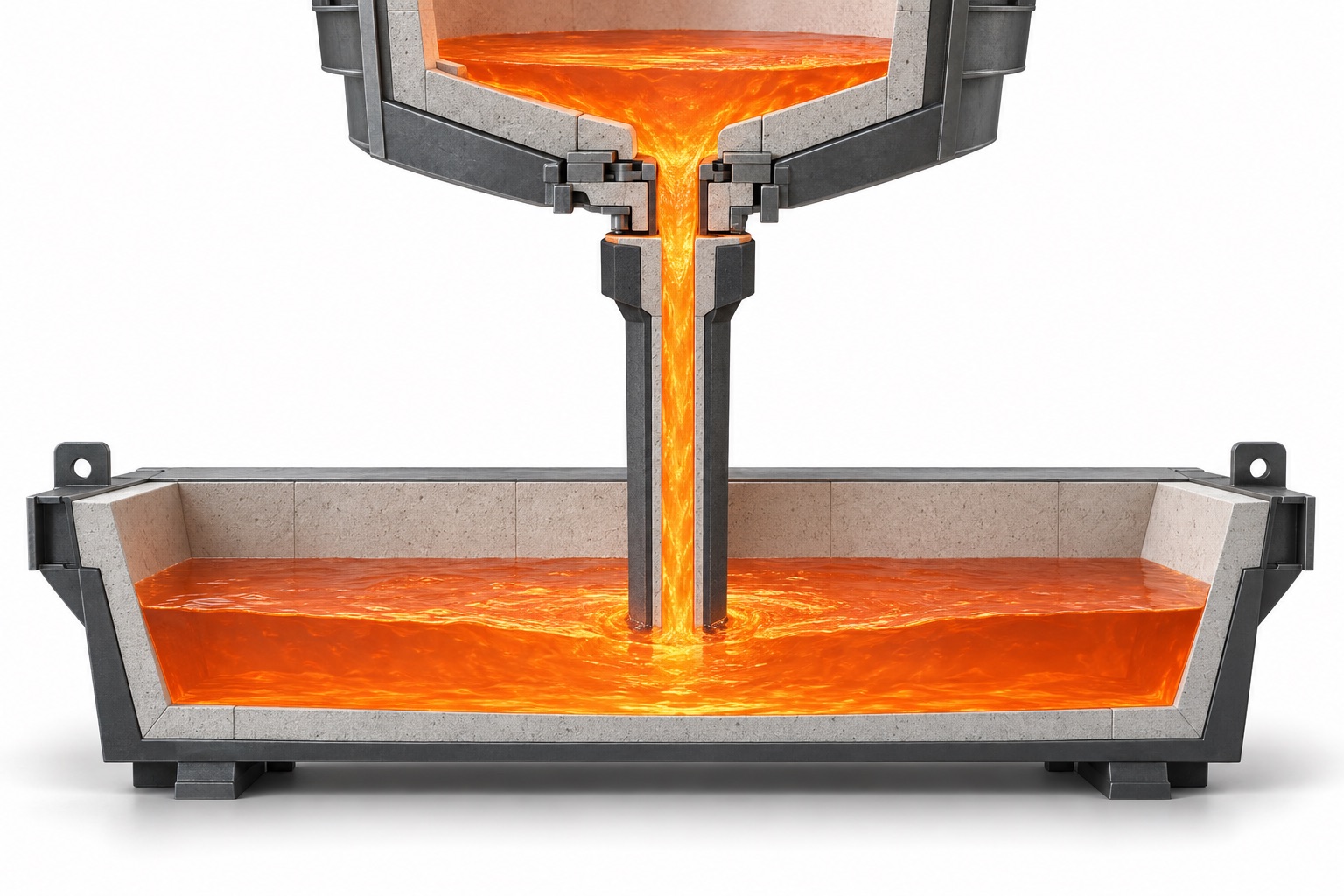
Structure and steel flow
Steel enters from the ladle collector nozzle and travels down the bore into the tundish. The shroud protects and conveys the stream; the associated flow control system regulates throughput.
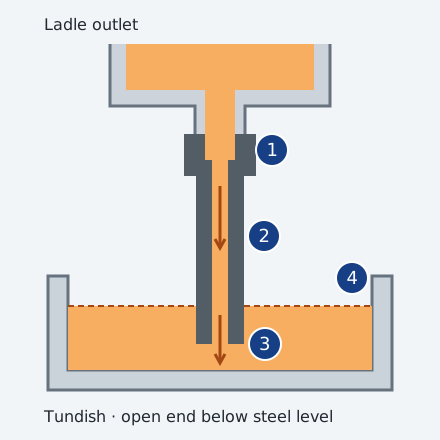
- 1
Upper connection
Match the cup to the collector nozzle. Review seating geometry, alignment and sealing together.
- 2
Tube and bore
The long bore forms the protected transfer passage. Review bore and wall geometry against throughput, steel grade and service conditions.
- 3
Open end and bath level
The axial outlet is open. Confirm tube length and position against tundish level changes, ladle changes and handling space.
- 4
Mating equipment
The handler, collector nozzle and tundish receiving zone define the installation space. Surrounding equipment is shown only for context.
Product range and matching considerations
| Shrouds without preheating | Confirm start up and service practice using the instructions for the specified product. |
|---|---|
| Shrouds for large slab casting | Review throughput, tube length, seating geometry and tundish arrangement together. |
Connection fit
Provide collector nozzle, seating and handling drawings to establish the contact surfaces.
Working length
Review tube length, outlet position and ladle change clearance against the bath level range.
Service conditions
Describe preheating, sequence requirements and current wear. Follow the instructions for the specific grade.
Functions and selection considerations
Steel stream protection
Limits contact with air during steel transfer from ladle to tundish.
Connection fit
Review the seating surface and connection dimensions with the collector nozzle and handling equipment.
Tundish entry
Confirm tube length and outlet position against tundish level, available space and start-up practice.
Information for product selection
Drawings and operating details help confirm product fit and service requirements.
| Connection drawings | Ladle outlet, seating surface and handling arrangement |
|---|---|
| Tundish conditions | Level range, available space and immersion requirements |
| Operating conditions | Steel grade, temperature, ladle changes and operating practice |
| Service requirements | Preheating arrangements, sequence needs and current product |
Materials, dimensions and service requirements are subject to the agreed technical documents.
Discuss drawings and requirementsRelated products
Let’s discuss
your application.
Contact Hongda about product selection, drawings, operating conditions and cooperation.
- Telephone
- +86 533 5688763
- Address
- Dongliu Village, Luocun Town, Zichuan District, Zibo, Shandong, China
Product enquiry
Create enquiry emailReview and send in your email app. Attach drawings there.
You can also paste the details into your webmail.